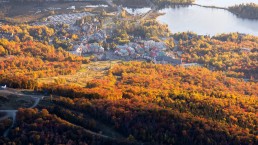
Located in the heart of the Laurentians, Tremblant is an exceptional playground for nature lovers. With mature forests, lakes, wetlands and trails surrounded by vegetation, the region is home to a wide variety of birds that can be observed throughout the year.
- Why Mont-Tremblant is a popular destination for birdwatching
- The best places to observe birds in Mont-Tremblant
- How to start birdwatching: 5 simple steps
- Which birds can you see in Tremblant?
Why Mont-Tremblant is a Popular Destination for Birdwatching
Whether you are a passionate birder or simply curious to identify the bird you spotted during a hike, Tremblant offers countless opportunities to slow down, listen and discover the winged wildlife that calls the mountain home.
Birds can be found throughout Tremblant, but they are not all discovered in the same places. The region’s diverse habitats contribute to its rich birdlife:
- Boreal forests and mountain areas attract many forest bird species.
- Lakes and wetlands provide ideal environments for waterfowl.
- Gardens and landscaped areas can become true refuges for local and migratory species.
The secret to spotting them? Take your time. The best encounters often happen when you walk slowly, look around and listen carefully.

The Best Places to Observe Birds in Mont-Tremblant
Pedestrian Village and Mont Tremblant: A Different Way to Observe
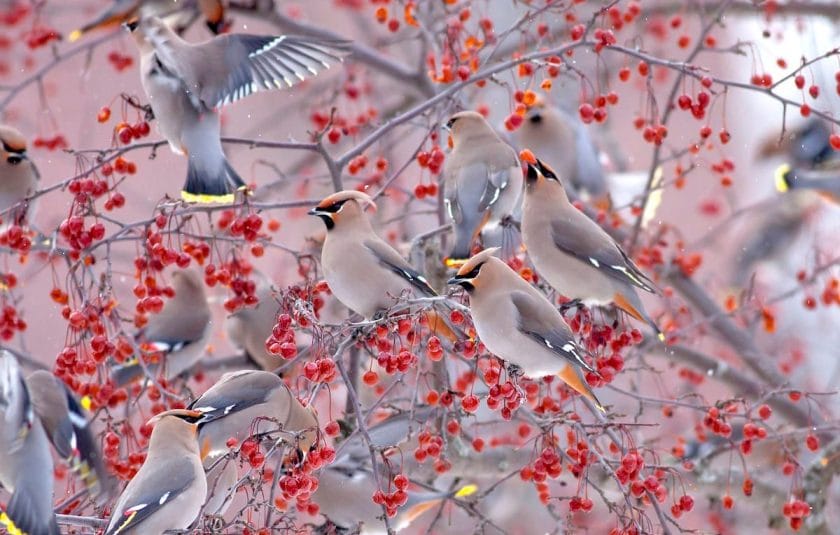
Even in the heart of the action, you can enjoy great birdwatching opportunities. The green spaces, mature trees and gardens of the pedestrian village attract several common species. In winter, crabapple trees are especially popular with Bohemian Waxwings, which travel south from northern regions to enjoy the small fruits available here.
Birdwatching experiences to discover here:
- Birds of Prey Show: An impressive encounter with fascinating birds that allows visitors to learn more about their characteristics, behaviours and importance in nature.
- Apprentice Falconer: An immersive experience where participants discover the world of falconry and get closer to magnificent birds of prey while learning about the work involved in caring for these animals.
Domaine Saint-Bernard: A Haven for Bird Lovers
Domaine Saint-Bernard is a true wildlife refuge thanks to its many trails, diverse habitats and initiatives that support biodiversity. Its carefully designed bird garden provides a welcoming environment for several species with nesting boxes, water features and plants selected for their ability to attract and feed birds.
With its variety of environments, from forests to more open spaces, the domaine is also an ideal place to discover birdwatching and learn how to identify the different species that live in the region.
Birdwatching experience to discover here:
- Introduction to Birdwatching: Perfect for beginners, this activity guides participants through their first discoveries. Learn how to use your senses, identify certain species and understand the basics of bird observation.
Mont-Tremblant National Park: An Immersion in Nature
Mont-Tremblant National Park is a must for birdwatching enthusiasts. With its vast forests, rivers, lakes and many trails, the park offers a wide variety of habitats ideal for observing birds.
Depending on the season and the area explored, visitors may spot forest birds, birds of prey and several migratory species.
💡 Early morning, when the forest comes alive, is often the best time to hear bird songs and spot active birds.
How to start birdwatching: 5 simple steps
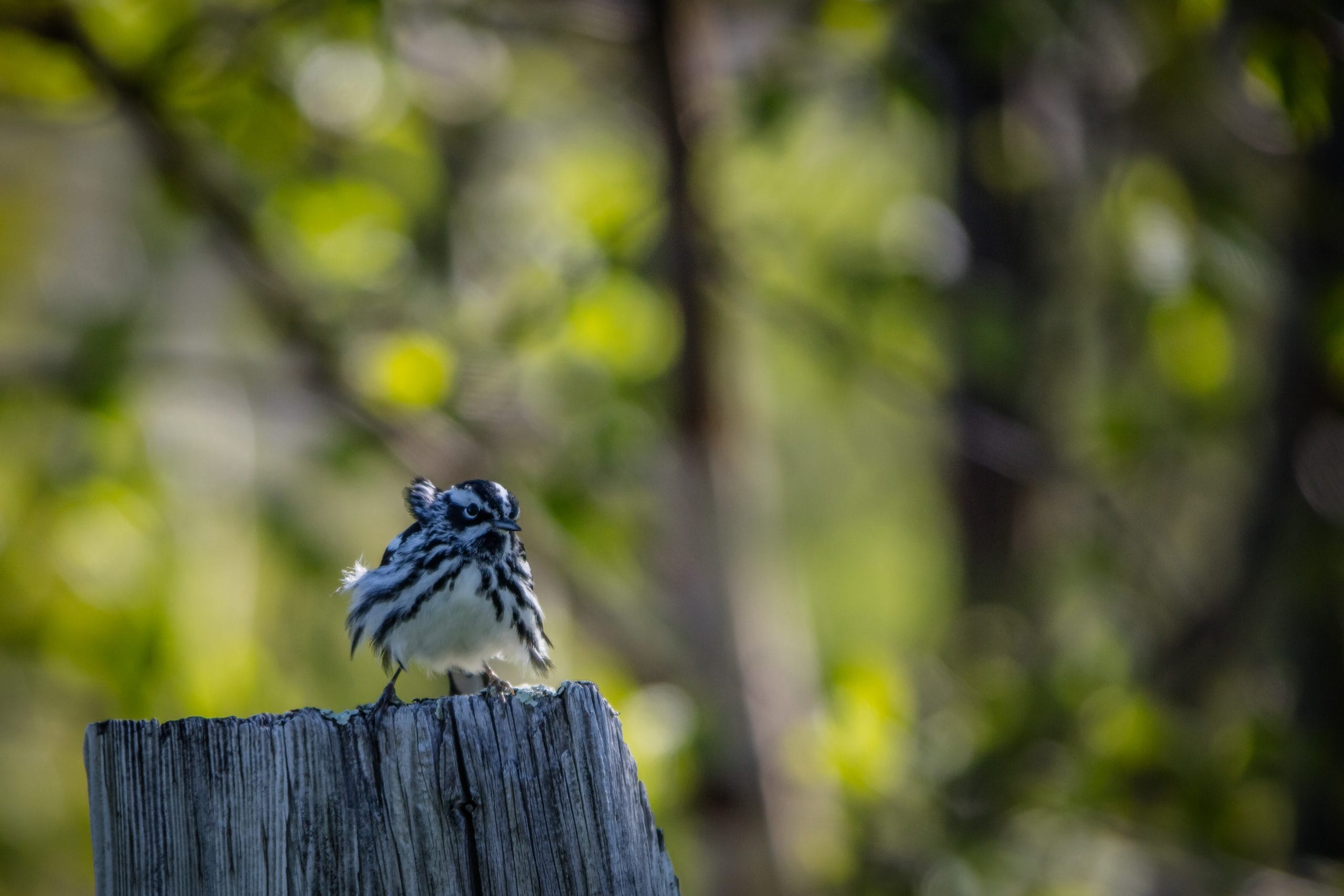
Birdwatching does not require you to be an expert. With a little practice, every walk becomes an opportunity to discover something new.
1. Identify the habitat
The environment where you find a bird is an important clue. Each species has preferred habitats. Ask yourself:
- Is it near a lake?
- In a dense forest?
- In a wetland?
- In an open area?
2. Observe the silhouette and posture
Before even looking at colours, pay attention to the bird’s overall shape:
- Is it small or large?
- Is it slender or stocky?
- How does it perch?
- What is the shape of its wings or tail?
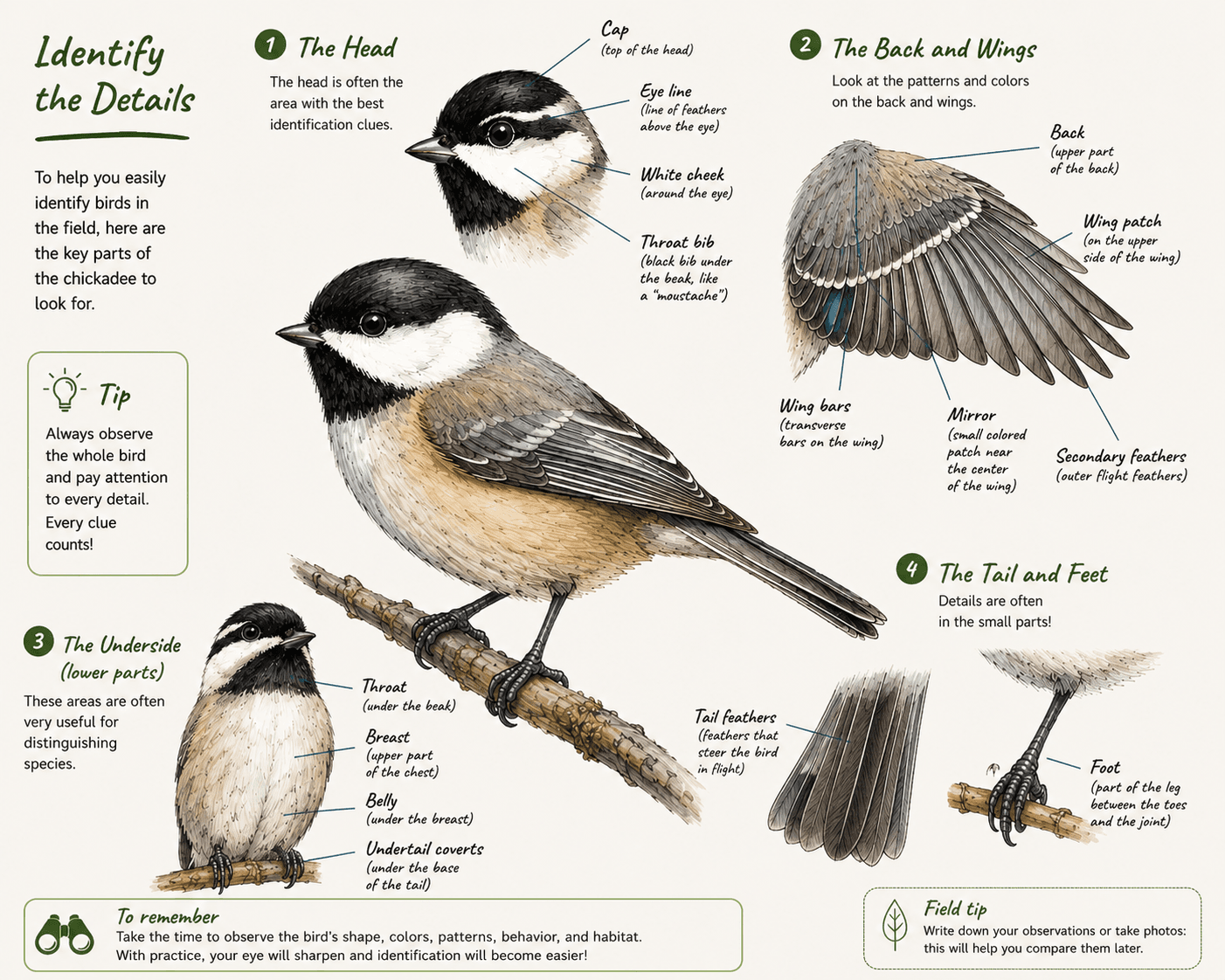
3. Look at plumage details
Colours and patterns are key elements for identification. Small details can often make the difference between two similar species. Pay attention to different parts of the body:
- The crown (top of the head)
- The eye stripe
- The eye ring
- The rump
- The wings and feather patterns
4. Listen before looking
Birds do not always show themselves, but they often make themselves heard. A good pair of ears can sometimes be just as useful as a good pair of binoculars. Learn to recognize:
- Songs
- Calls
- Sounds created by their movements
5. Take notes
Keep track of your discoveries during your walks in Tremblant. Note the date, the trail you explored, the location where you spotted the bird, its behaviour or the number of individuals observed.
These small details make each observation even more memorable and help you better recognize the species that visit the mountain throughout the seasons.
Essential Tools For Birdwatching
- Binoculars: A good pair of binoculars can completely transform the experience. Choose a model that suits your vision and is comfortable to use. The level of magnification will also depend on the type of observation you are interested in: a bird far away on a lake and a small bird in a tree do not necessarily require the same equipment.
- Identification guides: A field guide or app can quickly become your best ally. Choose Quebec based resources to find the names commonly used here and avoid differences found in some European guides.
- Birdsong identification apps: Apps such as Merlin Bird ID can help identify birds through their songs and deepen your knowledge.
- Birdwatching communities: Birding clubs allow you to learn from other enthusiasts and take part in population monitoring initiatives, such as tracking specific species.
Which Birds Can You See in Tremblant?
In Mont-Tremblant, every birdwatching outing brings new discoveries. Some species especially capture visitors’ attention because they are easy to recognize, frequently seen or simply fascinating to observe in their natural habitat.
The region is home to a great diversity of birds, with more than 170 species recorded in the area according to observations shared on various platforms, including eBird Canada. To discover the birds found in the region and plan your next outings, consult updated bird lists from Avibase as well as resources from the local birding club, Le Moqueur.
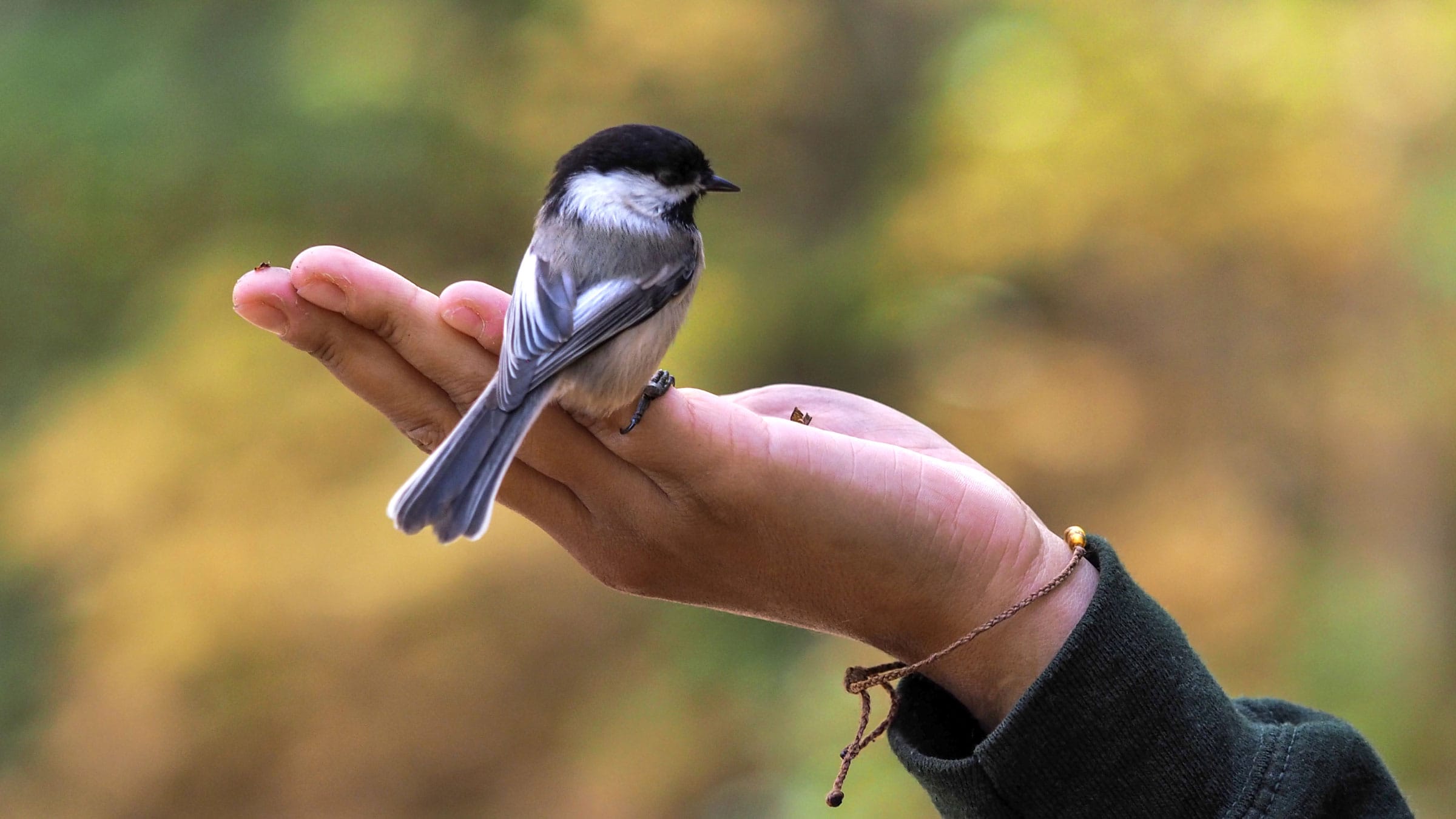
- Black-capped Chickadee: A familiar bird found at feeders and along trails. (Domaine Saint-Bernard)
- Blue Jay: Colourful, loud and easy to recognize.
- American Robin: A classic sign of spring and common on lawns.
- Red-breasted Nuthatch: Common in conifer forests and typical of the Laurentians.
- White-breasted Nuthatch: Often seen near mature trees and feeders.
- White-throated Sparrow: Its song is strongly associated with Quebec forests.
- Dark-eyed Junco: Very visible during the colder months and around wooded areas.
- Downy Woodpecker: A small woodpecker that is common and easy to identify. (Emblem of the Town of Mont-Tremblant)
- Hairy Woodpecker: Similar to the Downy Woodpecker, but larger.
- Pileated Woodpecker: Spectacular and highly sought after by visitors.
- American Crow: Very common around populated areas.
- Common Raven: Found in mountain areas and known for its vocal calls.
- American Goldfinch: Appreciated for its bright summer colours.
- Cedar Waxwing: A beautiful flocking bird often found near fruit bearing shrubs.
- Ruby-throated Hummingbird: Very popular in summer, especially near flowers.
- Tree Swallow: Seen above fields, lakes and open areas.
- Eastern Bluebird: Highly appreciated, especially in open habitats.
- Red-eyed Vireo: Very common in forests, although more often heard than seen.
- Ovenbird: One of the most typical forest warblers.
- American Redstart: Colourful, active and popular among birders.
- Ruffed Grouse: An iconic bird of the forest understory.
- Common Loon: A symbol of northern lakes, highlighted by Sépaq in Mont-Tremblant National Park.
- Great Blue Heron: Impressive, especially near lakes and marshes.
- Canada Goose: Very familiar and easy to recognize.
- Osprey: A spectacular bird of prey often seen near bodies of water.

Whether you are looking for a new passion or simply curious to identify the bird you spot during your next getaway, Tremblant invites you to take a closer look at nature.